EOR for retail industry: benefits, considerations, and how to choose

Robbin Schuchmann
Co-founder, Employ Borderless
An EOR (Employer of Record) is a complete employment service that allows businesses to hire and manage employees in different regions without setting up a local entity. The retail industry should work with an EOR to expand into new markets while effectively managing workforce and compliance needs.
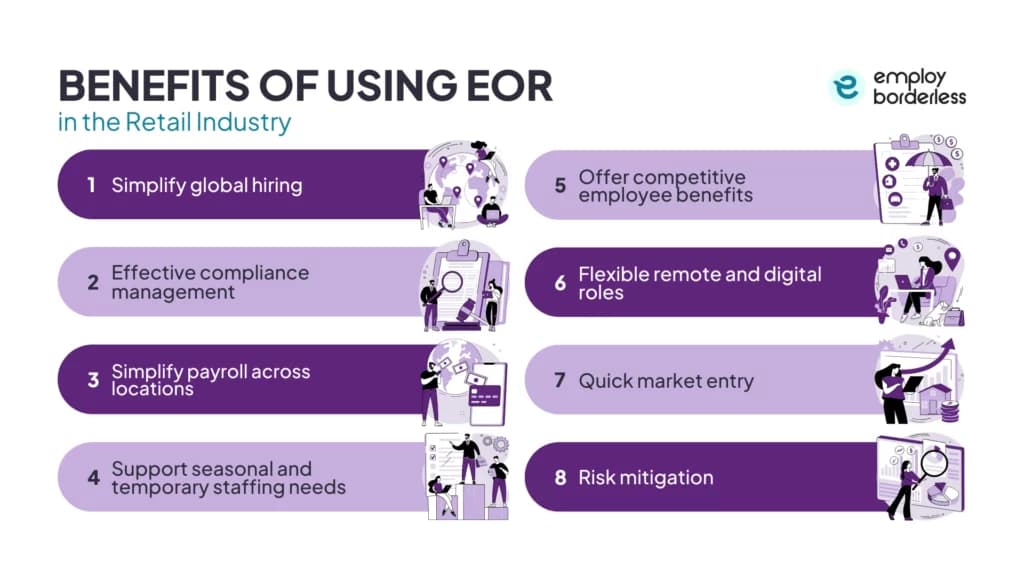
The benefits of using an EOR in the retail industry include simplified global hiring, effective compliance management, simplified payroll across locations, support for seasonal and temporary staff, competitive employee benefits, flexibility for remote and digital roles, quick market entry, and risk mitigation.
The factors that the retail business should consider when choosing the right EOR include expertise in retail compliance, flexible workforce options, global coverage, pricing models, support services, and transparency.
What is an EOR?
An EOR (Employer of Record) is a third‑party organization that legally hires and manages employees on behalf of another company. This third-party service provider handles payroll, taxes, benefits, and employment compliance, while the client company maintains control over the employees' routine work.
Why should the retail industry work with an EOR?
The retail industry should work with an EOR because it deals with difficulties such as understanding local labor laws, managing cultural differences, keeping up with tax compliance, and attracting and retaining qualified staff across multiple regions. An EOR helps retail companies expand internationally while staying compliant with employment regulations. It reduces administrative burden, provides expert guidance on global hiring, and handles payroll and benefits administration expertly.
What are the benefits of using EOR in the retail industry?
The benefits of using EOR in the retail industry include simplified global hiring, effective compliance management, simplified payroll across locations, support for seasonal and temporary staffing needs, flexibility for remote and digital roles, and risk mitigation.
Simplify global hiring
An EOR makes it easy for retail companies to hire employees in different countries without setting up local entities. It handles employment contracts, onboarding, and legal requirements, and helps retailers quickly build international teams. This lets organizations focus on business growth while managing complex hiring procedures.
Effective compliance management
Retail businesses often operate in multiple regions with different labor, tax, and employment laws. An EOR complies with regulations related to employment or taxation and manages local contracts, taxes, and benefits. This active compliance management builds long-term stability and credibility for the organization.
Simplify payroll across locations
An EOR manages payroll for employees across multiple countries through a unified system. It helps maintain accurate and timely payments in different currencies and handles important tax deductions.
Support seasonal and temporary staffing needs
Retail demand changes throughout the year, especially during peak seasons like holidays. EORs allow companies to hire seasonal or short-term employees quickly without establishing local entities. They handle contracts, payroll, compliance, and offboarding for temporary workers and help businesses grow or reduce their workforce according to seasonal demand or project needs.
Offer competitive employee benefits
An EOR provides access to global benefits packages, like health insurance, paid leave, and retirement plans. It also manages all administrative and legal aspects of benefits distribution and compliance. These competitive benefit packages improve employee satisfaction, engagement, and retention across borders and position the company as a desirable global employer in the job market.
Flexible remote and digital roles
The rise of e-commerce has led to retail operations allowing flexible remote and digital roles for employees. An EOR handles employment for these employees globally by managing contracts, payroll, and compliance. This flexibility allows companies to operate smoothly in remote and hybrid work environments.
Quick market entry
An EOR allows retail companies to enter new markets quickly without establishing a legal entity and to start hiring immediately. It manages hiring, payroll, and compliance, which saves time and resources and allows companies to enter emerging markets with less administrative effort.
Risk mitigation
An EOR reduces employment-related risks for retail businesses by handling legal, tax, and compliance responsibilities. It makes sure that all employment practices comply with local laws, such as PTO (Paid Time Off) rules or wage and hour laws, and protects the company from penalties and legal disputes.
What are the real-world applications of EOR for the retail industry?
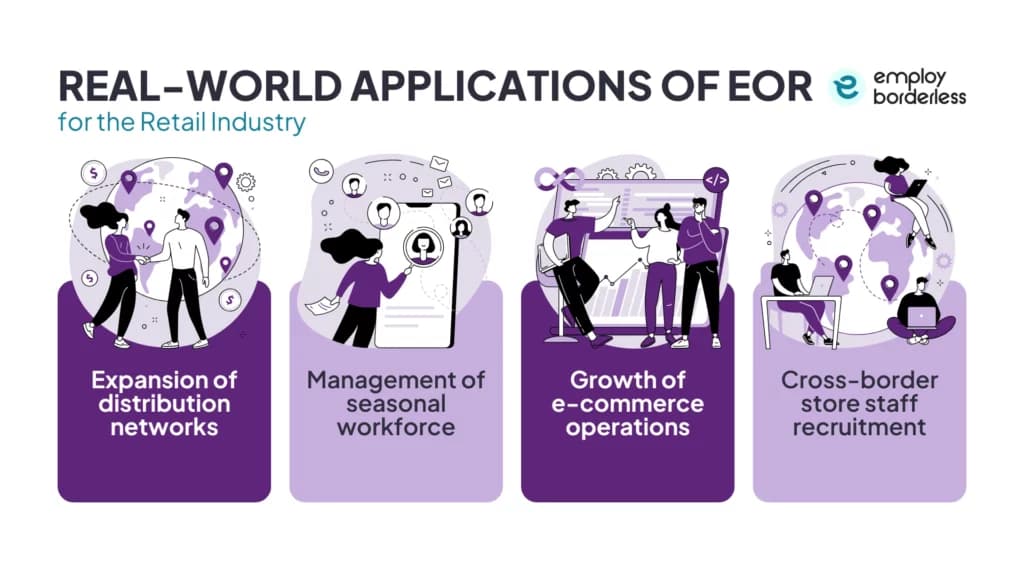
The real-world applications of EOR for the retail industry include the expansion of distribution networks, the management of seasonal workforce, the growth of e-commerce operations, and the cross-border store staff recruitment.
The real-world applications of EOR for the retail industry are mentioned below.
- Expansion of distribution networks: EOR services help retail companies expand their distribution channels across different countries by managing local hiring and compliance. It handles the legal and payroll responsibilities for logistics, warehouse, and supply chain employees.
- Management of seasonal workforce: Retail demand increases during peak seasons, such as holidays or sales events. An EOR helps businesses quickly hire, onboard, and pay temporary staff while complying with labor laws such as OSHA (Occupational Safety and Health Administration) regulations.
- Growth of e-commerce operations: EORs support online business expansion by hiring global talent for roles like IT, marketing, and customer service as retail shifts towards digital platforms.
- Cross-border store staff recruitment: EORs simplify the hiring process for international retail stores by managing employment in different countries. They comply with local labor regulations, handle payroll, and provide benefits to store employees.
How to choose the right EOR for your retail business?
To choose the right EOR for your retail business, consider factors like expertise in retail compliance, flexible workforce options, check their global coverage, compare pricing models, ask about support services, and look for transparency.
Choose an EOR that understands labor laws, wage requirements, and retail-specific regulations across different markets. This expertise helps your business stay compliant with local employment standards and reduces legal risks.
Select an EOR that offers flexible workforce options to manage both permanent and seasonal staff. This flexibility allows your business to adjust operations based on retail demand without placing an extra burden on resources.
Collaborate with an EOR that operates in all the countries or regions where you plan to expand. Global coverage allows your business to manage multiple international locations under one provider and simplifies business operations.
Review the EOR's pricing structure to understand costs for services like payroll, benefits, and compliance management. Transparent pricing helps you plan budgets and avoid hidden fees, so compare multiple EORs before collaborating.
Partner with an EOR that provides dedicated support, which includes HR, legal, and payroll assistance. Strong support leads to quick issue resolution, smooth employee management, and helps your retail business maintain consistent global operations.
Select an EOR that maintains clear communication and shares detailed reports on payroll, taxes, and compliance with the client. Transparency builds trust, maintains accountability, and helps businesses make informed operational decisions.
What services does the EOR offer for different industries?
The services that an EOR offers for different industries include payroll management, compliance with local labor laws, employee onboarding, and benefits administration. EOR services for industries help businesses manage their workforce productively, reduce risks, and focus on core operations.
What does EOR mean in real estate?
EOR means in real estate to a service provider that manages payroll, taxes, and compliance for real estate agents, contractors, or project staff. EOR for real estate allows firms to hire workers legally across different regions without setting up local entities.
What is the difference between EOR and BPO?
The difference between EOR and BPO is that EOR (Employer of Record) legally employs workers on behalf of a company, managing payroll, benefits, taxes, and compliance, while the client directs daily tasks. BPO (Business Process Outsourcing) involves outsourcing specific business functions, such as customer service, accounting, or IT.
Why are EOR certifications important for the retail industry?
EOR certifications are important for the retail industry because they guarantee compliance with labor, tax, and data protection regulations across different regions. EOR certifications maintain high standards of security, accuracy, and transparency in payroll and employment practices.
How is EOR software used in the retail industry?
The EOR software is used in the retail industry to manage payroll, employee onboarding, compliance, and benefits across multiple locations. EOR software automates payments, tracks workforce data, and maintains labor law compliance in different regions.
Is an EOR a staffing agency?
No, EOR is not a staffing agency because staffing agencies recruit and supply temporary workers. An EOR legally employs workers on behalf of a company and manages payroll, taxes, benefits, and compliance.

Co-founder, Employ Borderless
Robbin Schuchmann is the co-founder of Employ Borderless, an independent advisory platform for global employment. With years of experience analyzing EOR, PEO, and global payroll providers, he helps companies make informed decisions about international hiring.
Learning path · 8 articles
EOR fundamentals
Master the fundamentals with our step-by-step guide.
Start the pathReady to hire globally?
Get a free, personalized recommendation for the best EOR provider based on your needs.
Get free recommendations