What EOR CEOs actually believe, and why
An ongoing analysis of 70+ podcast interviews with the founders behind the biggest Employer of Record companies.

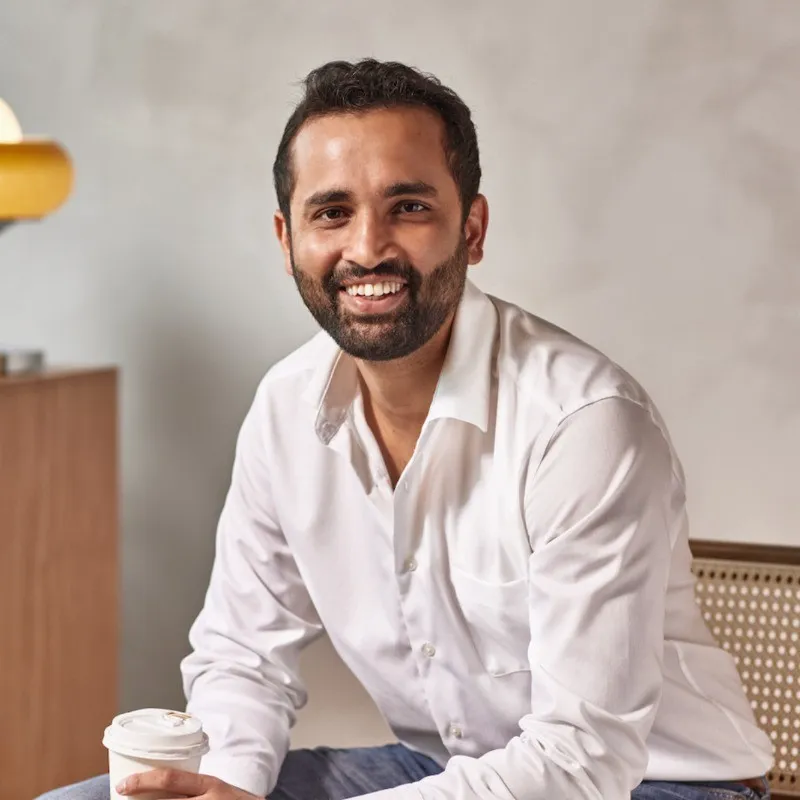
Robbin Schuchmann
Co-founder, Employ Borderless
The EOR market is growing fast and it's not slowing down. Remote work isn't a trend anymore, it's how a growing number of companies operate. That much is clear.
What's less clear is what the people actually building these companies think. There are 7 major EOR providers right now, each run by founders with strong opinions on where this industry is headed. But it's hard to piece together who thinks what. Their views are scattered across dozens of podcast interviews, conference talks, and webinars.
I got curious. Do all these founders actually agree on the big questions? Are they all still bullish on remote work, or have some shifted? How do they talk about each other? What do they think about AI, regulation, and competition? I wanted to see their actual positions side by side, based on what they've said publicly.
So I started going through their interviews. 52+ hours of video so far, across 59+ podcasts and shows, covering everything from founding stories to where they think the market is going. I extracted their key quotes, tracked their claims, and mapped out their sentiment on the topics that matter most.
This page is the result. It's also a living document. Every time a new interview comes out, I'll add it here. The goal is simple: a single place where you can see what EOR founders actually think, in their own words, and whether their views have changed over time.
CEOs that I've analyzed






If you reference this analysis, please link back to this page.
Key findings
Bouaziz repeatedly frames Deel's multi-product strategy as founder-led acquisition of expertise rather than internal R&D: 'You get them to build what actually matters' (Giant Ideas, July 2026). He credits acquiring companies at Series A/B for payroll engines (PaySpace, South Africa), immigration (Legalpad), IT (Hofy), and compensation (Assemble) — in each case rebuilding the back end inside Deel in 12 months while using the acquired front end to train salespeople immediately. His father — a dealmaker with 50+ M&A transactions behind him who serves as Deel's CFO — shaped the acquisition playbook, and Bouaziz says he has personally run payroll for 7,000+ employees on Deel's own platform every month.
Read moreConrad frames the compound startup concept not as a product strategy but as a revenge architecture: building Rippling to prove David Sacks and Bill Gurley wrong about focus (YC podcast, Jan 2025; Kleiner Perkins, Nov 2023; 'Revenge Fantasy', Nov 2025). He tells the 'Revenge Fantasy' interview 'everything that is great about the company comes from this thing that started out as something we were apologetic about.' He now runs payroll for 3,200+ employees himself, approves every expense over $10, and describes this hands-on use as giving him 'a right to an opinion about the product.' He launched Rippling with three parallel SKUs from day one — not one narrow thing — as a deliberate bet against the YC/Sacks/Gurley consensus.
Read moreVan der Voort tells the Founder Thesis podcast (Jan 2024) that Remote charges $599/month per employee of record regardless of country, explicitly to not disincentivize salary raises: 'I don't want to charge a percentage because it discourages giving people raises, which I think is unethical.' He also says Remote burns essentially no cash despite having raised $500M, and that the contractor product is 'essentially free' at $19/month. He frames this as a structural advantage over competitors who charge onboarding fees, offboarding fees, and FX fees on every transaction. No other EOR founder in the corpus discusses unit economics with this level of specificity.
Read moreConrad describes in detail ('Parker Conrad's Revenge Fantasy', Nov 2025) how Rippling identified the spy via Slack search logs obtained from Salesforce employees, fabricated a 'DD Defectors' channel in a legal letter sent to Deel's CFO (Alex Bouaziz's father), GC, and outside counsel, and triggered a search at 8pm that confirmed the spy accessed the fake channel by 4am. The spy then factory-reset his phone, attempted to flush it down a toilet, and was allegedly instructed by Deel attorneys to destroy evidence and relocate to Dubai — a claim made in Irish court proceedings. Bouaziz, interviewed separately (20VC, Oct 2025; Rex Salisbury, Jan 2026), says only 'I cannot comment on ongoing litigations' and pivots to September being 'our first 100M revenue month.' Neither founder acknowledges the other's framing.
Read moreJamous describes reaching a unicorn exit at Nexmo/Vonage while 'feeling miserable' — poor health, strained relationships, a founder who 'burns out every three months.' He founded Oyster explicitly as a mission-first company with sustainable leadership, and by 2026 had prepared the organization for a new CEO while moving himself to executive chairman, framing attachment to the role as the thing most leaders can't give up.
Read moreKhatri (Multiplier) tells the SaaSBoomi podcast (May 2023) how Multiplier prices employer-of-record seats and lets partners resell at margin, and tells the Nirit Cohen podcast (May 2026) that Multiplier has processed $2B in cross-border wages and targets 3% of the $180B global cross-border wage market. Serik (RemoFirst) leads with 'world's most affordable employer of record' at every public appearance (Web Summit 2025, Startup Grind 2026, Diversio 2025) but gives no specific pricing. Bouaziz (Deel) and van der Voort (Remote) both discuss pricing philosophy but resist head-to-head price comparison. Conrad (Rippling) never discusses price in any interview.
Read moreThe analysis
What emerges when you read all 70 interviews side by side, rather than one at a time.
Where each founder stands
Mapping founder positions on two key dimensions: how they feel about remote work (vertical) and AI adoption (horizontal).
The remote work debate
How EOR company founders think about the future of remote and distributed work.
Alex views being a genuinely remote, globally distributed company as a structural competitive advantage over in-office rivals, both for product credibility in the global HR market and for accessing talent outside expensive tech hubs.
Remote-first global hiring is framed not as a values statement but as a hard financial and talent arbitrage: European engineering talent from top universities can be hired at dramatically lower cost than Bay Area equivalents, directly enabling the burn discipline that powered Deel's early growth
“when everybody's fighting for AI engineers in San Francisco seeing crazy offers left and right, we can hire AI engineers anywhere — and trust me, there are really talented people around the world”
Frames global remote hiring as a direct talent arbitrage advantage, particularly salient in the context of the current AI talent war
“if we can help hundreds of millions of people get to work for the best companies in the world by making it so easy so that you just think, hey, you know what? This person in Kenya is amazing. Let me click a bunch of buttons and they'll be hired and have the best benefits, the best infrastructure — it's such a powerful thing.”
Articulates the long-term mission of Deel beyond payroll software — democratizing access to global employment opportunities.
“the world is a very big place it's all about working with the best people wherever they are rather than being limited to a 30 miles radius and that's really what Deel is all about”
Encapsulates Deel's core mission and founding philosophy in one sentence
Tony explicitly advises against hybrid work models, calling them the 'trickiest' and least effective configuration, and recommends companies choose either fully remote or fully in-office to avoid culture and communication failures.
Tony attributes most return-to-office mandates to leaders confusing presence with productivity and a failure to redesign operating systems for distributed work — not to legitimate productivity concerns.
“The trickiest mode would be hybrid and I would not recommend hybrid to organizations.”
A strong and controversial operational stance from someone with deep experience running distributed teams, directly challenging the dominant corporate trend.
“The economical output of a worker is going to be less and less dependent on where they are located. And that's a great news for the world and great news for Oyster and our mission.”
Directly links AI-driven productivity gains to Oyster's core mission of democratizing global employment opportunity.
“we know that remote work is better for people, better for business, deliver higher productivity, more flexibility, distribute opportunity on the planet, create high level of diversity”
Concise encapsulation of Oyster's core value proposition and Tony's unambiguous bullish stance on remote work
Building a diverse, geographically distributed team is framed by Sagar as a business necessity rather than a values statement: without global teams, companies cannot build products that resonate with global customers or service them in their time zones.
“Going global is table stakes — if global is your strategy then you don't have a strategy because that's so table stake.”
Strong normative claim that borderless hiring is now a baseline expectation, not a differentiator
“we make sure people don't move for work, but work moves towards people”
Concisely captures Multiplier's core value proposition and the philosophical shift from traditional offshoring to distributed global employment
“as a talent, you should be able to work for the company that you enjoy working for, that pays the most bang for the buck, and live wherever you want without leaving your loved ones”
Articulates the end-state vision for global distributed work from the employee perspective — geography should not constrain opportunity or lifestyle
Nurasyl advocates a 'talent first, headquarters second' mindset, arguing that distributed micro-hubs allow startups to access exceptional talent that locally-focused competitors cannot reach
He views AI as a structural advantage for remote-first companies because comprehensive documentation — required in remote environments — becomes instantly searchable and usable with AI tools
“people don't ask where should I hire people, they ask who is the best person that I can hire — that's the key differentiation where you're not optimizing for a certain location but rather finding the best talent that exists there”
Captures RemoFirst's core thesis that global hiring is now talent-first, not location-first
“great work doesn't mean that you stay the longest hours. What great work for us means in our team is the impact and the outcome — that's it, as simple as it gets”
Articulates RemoFirst's internal culture philosophy and how it extends to their product offering
“Bigger organizations — they felt maybe it was bad because people were remote but I think you're looking at the wrong root causes of a problem”
Directly challenges the return-to-office narrative pushed by large tech companies, suggesting poor business performance is being misattributed to remote work
Remote-first works best when leaders treat culture as an emergent property shaped by scaffolding (values, handbook, communication norms) rather than something that can be directly engineered or preserved as a company scales.
The return-to-office wave is primarily driven by companies that manage on presence rather than output and by a fundamental trust deficit — not by evidence that remote work reduces productivity.
“the majority of meetings that people have in businesses are waste of time because sharing of information is something where you don't need to be in the room right — if I just want you to get a certain message I can just send you a message instead of starting a meeting.”
Core principle behind Remote's async-first operating model; directly challenges default meeting culture in most companies
“a lot of companies are just not very good at managing performance and managing work. They don't manage on output. They manage on presence — on activity rather than actual output. And if you do that then yeah being in the office is a form of activity rather than output.”
Identifies the root cause of the return-to-office trend as a performance management failure rather than a genuine productivity argument
“there's a bit of a gap and that gap is crossed with trust. If you don't trust your people, then that gap will feel infinitely large. And then what is the solution? Well, you will go to the office because I know I have to trust you because I see that your butt is in the seat.”
Articulates the psychological driver of RTO mandates as a trust deficit rather than a productivity or collaboration rationale
The compound software strategy — building deeply integrated products across HR, IT, and finance — is not just a go-to-market bundling play but a conviction that integration itself produces better products and measurably reduces customer headcount in back-office functions by roughly half.
AI in EOR
Where each founder stands on AI adoption in global employment infrastructure.
Deel's AI product has already automated approximately 140,000 hours of work in two months, and Alex sees AI as a compounding advantage that will further entrench large category winners through agent-driven software purchasing.
Deel has been profitable for over three years, which Alex uses to justify investing in brand marketing (e.g. Arsenal FC sponsorship) and to differentiate from competitors who lack comparable financial sustainability.
“we launched a product called AI which is doing amazing and it's basically our infrastructure that has helped us automate in like two months almost 140,000 hours”
Provides a specific, quantified metric for AI-driven operational efficiency — the kind of claim that will be scrutinised by analysts and competitors
“if you can start having AI agents doing the full migration for you end to end and switching a system goes from like months if not years of rollout into like a couple weeks or a couple days then that moat's completely gone”
Directly challenges the lock-in moat of legacy HR systems, signaling a major competitive shift Deel is positioning to exploit
“the traditional way of thinking of building products regardless of like which domain actually maybe fully disrupted if you can actually truly think about the problem in an AI first way”
Signals Deel is undergoing a fundamental internal rethink of product development philosophy driven by AI
Tony believes Oyster's core value proposition is reversing brain drain by letting workers in emerging economies access global opportunities without physically migrating — a mission he argues is directly aligned with, not in tension with, commercial growth.
He has committed publicly to Oyster becoming an AI-native, multi-billion-dollar company within the next few years, signalling that AI integration is now the top strategic priority under the new CEO.
“Brain drain is the number one reason why emerging economies remain defined as emerging because they lose their best people to more developed economies. And 90% of them don't return back home. And what they send back home is merely 5% of their income.”
Tony grounds Oyster's mission in a stark macro-economic argument, framing the company as a structural solution to a global development failure rather than simply a payroll tool.
“Today there is no doubt for Oyster to become a multi-billion-dollar impact company in the next few years, AI is going to play a key role and we're going to become an AI-native company.”
Tony publicly commits to an AI-native strategy and a multi-billion-dollar valuation target, setting a measurable bar for Oyster's future.
“For businesses like Oyster where it's about compliance, regulation, information and human service, AI is a gift for us. Like we are deploying AI everywhere in the organization”
Signals that AI is Oyster's top strategic priority and a fundamental transformation of both internal operations and customer experience
Compliance is the single biggest hidden risk in global hiring — Sagar cites data showing 46% of companies have failed to onboard a global hire due to compliance failures, yet only 8% feel fully compliant, making this a massive and underappreciated market problem.
Sagar is explicitly bullish that AI expands the EOR market rather than shrinking it — companies becoming more efficient with AI will redeploy savings into faster international expansion, driving earlier use of global hiring platforms.
“Thinking that AI will lead to a job loss, I think it's a very narrow thinking because you missed one very important point — the challenges in the world are not finite.”
Articulates a counter-narrative to AI job displacement fears, relevant to EOR industry concerns about AI reducing headcount
“in the age of AI building that product is not the moat or as we call defensibility anymore — anybody over a weekend can vibe code that product for you. So what is more important is that one deep insight that you have, one IP that you've built over the course of years”
Explains why AI is accelerating a shift from contractor/gig work to full-time employment — companies need to own IP, not just rent skills
“the challenges in life are not finite. The moment the smartest brains figure out a way to make themselves redundant they move to a bigger challenge in life”
Directly counters fears of mass job loss from AI by invoking historical precedent of technological revolutions creating new categories of work
AI is poised to make payroll processing up to 85% agentic, solving the global shortage of localized payroll expertise and automating compliance interpretation at scale
Building AI-native infrastructure requires freeing data from locked legacy systems first; companies that do this early will compound an advantage that is very hard for laggards to close
“I've been in this industry forever, as I said, more than 20 years, and this is the most exciting year in my career because AI actually changed every single aspect of payroll and is still going to change.”
Frames 2024/2025 as a historic inflection point for the payroll industry, elevating the urgency of AI adoption
“I think we are going to a future that also payroll processor can be probably 85% kind of agentic.”
A specific, bold numerical prediction about the degree of AI automation coming to payroll operations
“When I had my first mobile phone, my first kind of iPhone, I could do some things, but I could not create new things. And here, you can really create things.”
Articulates a qualitative leap AI represents over prior technology waves — from consumption to creation
RemoFirst's core market differentiation is affordability — Nurasyl founded the company specifically because EOR services were too expensive for SMBs, and claims the company is now the SMB market leader on that basis
He views AI as a structural advantage for remote-first companies because comprehensive documentation — required in remote environments — becomes instantly searchable and usable with AI tools
“they would lose their job faster not because of AI but because they didn't apply AI to become better”
Reframes the AI displacement narrative — the risk is not using AI, not AI itself
“being remote that means we have to document everything — all the steps, all the procedures within our company — and then with AI it became an interesting edge where we can search all of the things faster and better”
Shows how remote-first documentation practices create a structural advantage when AI is applied
“AI can create a scoring system where someone in the US went to Harvard and then someone in Morocco went to their best University and that's how they can compare — you don't need everyone to go to Harvard to be the top talent”
Articulates a concrete, equitable use case for AI in global hiring that challenges credential bias toward Western institutions
Effective remote management requires clear output expectations, asynchronous-first communication norms, deliberate onboarding, and continuous manager training — none of which are inherently harder than in-person equivalents
AI's near-term value in remote work is specific and practical: helping employees find, distill, and summarize information across large distributed organizations
“one of the challenges in large remote organizations is finding information not so much writing it down but finding it is very hard distilling it summarizing it I think those are things that we couldn't do in the past automatically now we can do them pretty well”
Identifies a specific, concrete use case where AI directly solves a known pain point in remote work — knowledge retrieval and synthesis
“AI is going to help a lot of the work that now has to be done by humans like interpreting laws will then be done by an AI who's going to be a lot cheaper than the lawyers that we pay today, so it will help us put pressure on pricing and make hiring people internationally a lot cheaper over time”
Rare candid admission from an EOR CEO that AI will compress their own pricing, framed as a positive outcome
“if you're not adopting AI today then you're behind but like in two years from now you're going to have really big problems”
Strong directional warning to companies slow to adopt AI, with an implied two-year urgency window
His core CEO operating thesis is that pace is a leadership responsibility: the CEO is the only natural constituency for speed in an organization, and must actively resist teams' tendency to solve constraints by extending timelines.
Parker is deeply skeptical of conventional startup wisdom, including the advice to focus narrowly, to hire 'been there done that' executives through recruiters, and to learn from failure — arguing that pattern recognition comes from success, not failure, and that the best executives are almost never found on demand.
“I am very skeptical that AI will be employment conserving. In basically every area we have not seen — and I think most large engineering orgs have not seen — a huge number of efficiencies from these coding assistants.”
A notable counterpoint to prevailing narratives about AI dramatically reducing software engineering headcount
“What's much harder than building AI applications are building governance and permissions and data pipelines. All of these AI agents are going to need to inherit the permissions of a person.”
Articulates why Rippling's identity and permissions infrastructure becomes more, not less, valuable in an AI-driven world
“Most of the value-add investors spend a lot of time talking about is best understood as a pantomime that investors are performing for their LPs — that is largely about investors needing to explain to LPs why their fee structure of 2 and 20 or 3 and 30 makes sense.”
A sharply critical and counterintuitive view of VC value-add that challenges a core assumption of the startup ecosystem.
The competitive landscape
How these CEOs talk about each other and position their companies in the market.
Deel has been profitable for over three years, which Alex uses to justify investing in brand marketing (e.g. Arsenal FC sponsorship) and to differentiate from competitors who lack comparable financial sustainability.
Alex views being a genuinely remote, globally distributed company as a structural competitive advantage over in-office rivals, both for product credibility in the global HR market and for accessing talent outside expensive tech hubs.
“if you can afford it, which thankfully at Deel we've been a profitable company for over three years now, then brand marketing is such an amazing thing to do — I strongly advise founders at our stage to invest in that”
Confirms Deel's multi-year profitability — a notable claim in a market where many EOR competitors remain loss-making — and signals a strategic shift toward consumer brand building
“a lot of the companies we compete against are in office and I'm like, that America-only company or London-only company is going to teach you how to hire globally without the infrastructure you need”
A pointed critique of in-office competitors, implying they lack the lived operational experience to truly serve global hiring needs
“I feel very comfortable telling you that no one is investing at the level of infrastructure that we're investing in”
Bold competitive claim about Deel's infrastructure investment relative to all market peers
He predicts knowledge work will dominate within 20–30 years as automation displaces factory roles, making geographic pay differentials obsolete and validating Oyster's long-term market thesis.
Oyster differentiates itself from both legacy EOR providers and tech-only competitors by combining a software platform with integrated human people services, which Tony calls a critical gap the market is not addressing
“most of the players are about speed or about automation and they're missing this critical part that makes a global employment platform a strategic partner for customers”
Articulates Oyster's core competitive differentiation — combining technology with human-centric service — against both legacy and tech-only EOR players
“There's been some scandals about some of our rivals who grew really fast by doing industrial espionage on other firms. That's definitely something that we won't do. We're not going to grow at all cost.”
Implicitly references known controversies in the EOR space and uses them to contrast Oyster's ethical growth approach.
“before having platforms like oyster only big companies had access to Global Talent right they had to think about Google — Google would have offices in 50 countries but if you're a small startup you cannot compete with Google on hiring these people”
Positions Oyster as a democratizing force that levels the playing field for SMBs against large multinationals in the global talent market
Compliance is the single biggest hidden risk in global hiring — Sagar cites data showing 46% of companies have failed to onboard a global hire due to compliance failures, yet only 8% feel fully compliant, making this a massive and underappreciated market problem.
The conventional assumption that EOR primarily serves US companies hiring abroad is now inverted: Multiplier's largest payroll volume by country destination is the United States, driven by global companies trying to access the US market and talent.
Partnerships are a global brand multiplier, functioning as an extension of sales and marketing in markets where building awareness independently would be prohibitively expensive
Nurasyl advocates a 'talent first, headquarters second' mindset, arguing that distributed micro-hubs allow startups to access exceptional talent that locally-focused competitors cannot reach
He uses a strict three-question market entry filter: does this market grow customers, improve talent access, and increase company speed — all three must be yes, or the expansion is a distraction
“we are the most affordable employer of record in the world”
RemoFirst's primary competitive differentiator stated clearly
Location-based market-rate pay is the only compensation model that works at scale; uniform global salaries will break, and the long-term effect of global hiring is salary convergence upward in lower-wage markets.
Remote differentiates from legacy EOR providers primarily through software automation and full infrastructure ownership, not service scale — enabling ~30-minute onboarding versus weeks or months for competitors.
“if you go to any of our competitors you want to onboard someone in a country like Germany or the UK it can take anywhere between a few weeks to maybe a few months with us you can do it in like 30 minutes or so and that's because we build really good software”
A concrete, falsifiable claim distinguishing Remote's speed from legacy EOR providers and grounding the competitive advantage in software automation rather than service headcount
“We specifically offer global payroll for companies that have run payroll in multiple countries and that is a very different market. It is not very well served. The products are really low quality. I think anything our competitors have brought out has been extremely low quality and so we have a belief we can do significantly better.”
Signals Remote's strategic expansion into global payroll and reveals a strongly critical view of competitor product quality in that segment
Parker attributes Rippling's founding and early survival primarily to the motivational force of his Zenefits departure — a 'revenge fantasy' that provided clarity and drive during years before product-market fit.
The compound software strategy — building deeply integrated products across HR, IT, and finance — is not just a go-to-market bundling play but a conviction that integration itself produces better products and measurably reduces customer headcount in back-office functions by roughly half.
“I believe that that company was built on this foundation of theft from competitors and that that was like a critical component of what they're doing.”
A serious public accusation against Deel's business model, going beyond the specific incident to characterize the company's entire competitive strategy as illegitimate.
“If deal sort of moves forward in a way that's unscathed, there is this risk that the overton window shifts and that this becomes a norm — everyone's got to have an espionage team and a counter espionage team — and I just don't think that's the way I want the world to work.”
Explains the strategic and ethical rationale for going public with the espionage story, framing it as an industry-wide norm-setting moment, not just a legal dispute.
“He did a factory reset on his phone, tried to flush it down the toilet, and then came out of the bathroom. The court officer was telling him, look, you're violating the court order, and he ran out of the building and took off.”
The most vivid moment in the Deel espionage story — illustrates the severity of the situation and the extreme steps the implicated employee took, lending credibility to Rippling's legal claims.
How views evolved
Tracking how founder sentiment shifted across 2020 to 2026.
| Founder | 2020 | 2021 | 2022 | 2023 | 2024 | 2025 | 2026 |
|---|---|---|---|---|---|---|---|
Alex Deel | - | - | Bullish3 eps | Bullish2 eps | - | Bullish3 eps | Bullish4 eps |
Tony Oyster HR | - | Bullish1 ep | - | - | Bullish3 eps | Bullish4 eps | Bullish6 eps |
Sagar Multiplier | - | - | - | Bullish1 ep | Bullish1 ep | Bullish1 ep | Bullish2 eps |
Eynat Papaya Global | - | - | - | - | Bullish3 eps | Bullish2 eps | Nuanced2 eps |
Nurasyl RemoFirst | - | Bullish1 ep | - | - | - | Bullish3 eps | Bullish1 ep |
Job Remote | Bullish1 ep | Bullish3 eps | - | Bullish2 eps | Bullish5 eps | Bullish4 eps | - |
Parker Rippling | - | - | Nuanced2 eps | Nuanced2 eps | Nuanced4 eps | Nuanced4 eps | - |
Showing remote work stance per year. Sentiment is derived from the dominant position across all interviews in that year.
Where they changed their minds
Positions that shifted between interviews. Sometimes the market changed, sometimes the pitch did.
"It felt like there was one and only one way out, which was to build this specific company and make it into a really big outcome."
"Rippling was born out of this revenge fantasy. That's what kept me going for the first couple of years. I love the people I work with, I really like the problems that we're solving... that's all extremely motivating."
Conrad has openly narrated the shift: the reputational-revenge motivation that launched Rippling faded into product and team motivation as the company scaled — he names the revenge fantasy directly and in the past tense by late 2025.
Founder sentiment matrix
How each founder feels about the five key dimensions shaping the EOR industry.
| Founder | Industry | AI | Competition | Remote work | Regulation |
|---|---|---|---|---|---|
Alex Bouaziz Deel | Bullish | Enthusiastic | Confident | Bullish | Concerned |
Tony Jamous Oyster HR | Bullish | Enthusiastic | Confident | Bullish | Supportive |
Sagar Khatri Multiplier | Bullish | Enthusiastic | Confident | Bullish | Concerned |
Eynat Guez Papaya Global | Bullish | Enthusiastic | Confident | Nuanced | Concerned |
Nurasyl Serik RemoFirst | Bullish | Enthusiastic | Confident | Bullish | Concerned |
Job van der Voort Remote | Bullish | Enthusiastic | Confident | Bullish | Concerned |
Parker Conrad Rippling | Bullish | Cautious | Confident | Nuanced | Concerned |
Where they agree
Where they disagree
What each founder talks about
The topics that come up most in each founder's interviews, sized by how often and how deeply they discuss them.
In their own words
448 direct quotes extracted from CEO interviews, each linked to the source video.
Showing 24 of 448 quotes
“if you can afford it, which thankfully at Deel we've been a profitable company for over three years now, then brand marketing is such an amazing thing to do — I strongly advise founders at our stage to invest in that”
Confirms Deel's multi-year profitability — a notable claim in a market where many EOR competitors remain loss-making — and signals a strategic shift toward consumer brand building
“we launched a product called AI which is doing amazing and it's basically our infrastructure that has helped us automate in like two months almost 140,000 hours”
Provides a specific, quantified metric for AI-driven operational efficiency — the kind of claim that will be scrutinised by analysts and competitors
“the story of Deel is actually built through following our customer base — I remember getting on customer calls and them telling me 'Alex I really want to be able to hire employees in different geographies' and after hearing it once, twice, three times you're like, well maybe I should just build it”
Illustrates Deel's customer-led product expansion philosophy, which explains how it grew from a contractor payments tool to a full HR stack
“I think M&A is probably one of the most underappreciated strategies to grow a business and it's really helped us develop ourselves a lot faster than most companies would”
Positions M&A as a core, not incidental, growth lever — relevant to how Deel has assembled its product suite and talent base
“a lot of the companies we compete against are in office and I'm like, that America-only company or London-only company is going to teach you how to hire globally without the infrastructure you need”
A pointed critique of in-office competitors, implying they lack the lived operational experience to truly serve global hiring needs
“when everybody's fighting for AI engineers in San Francisco seeing crazy offers left and right, we can hire AI engineers anywhere — and trust me, there are really talented people around the world”
Frames global remote hiring as a direct talent arbitrage advantage, particularly salient in the context of the current AI talent war
“the last thing you want is to become a cog in the system where you don't really have impact anymore — so I put the founders straight into me for the first year of them being in the business so I can empower them”
Reveals Deel's post-acquisition retention model: acquired founders report directly to Alex, preserving autonomy and reducing attrition risk
“Brain drain is the number one reason why emerging economies remain defined as emerging because they lose their best people to more developed economies. And 90% of them don't return back home. And what they send back home is merely 5% of their income.”
Tony grounds Oyster's mission in a stark macro-economic argument, framing the company as a structural solution to a global development failure rather than simply a payroll tool.
“Today there is no doubt for Oyster to become a multi-billion-dollar impact company in the next few years, AI is going to play a key role and we're going to become an AI-native company.”
Tony publicly commits to an AI-native strategy and a multi-billion-dollar valuation target, setting a measurable bar for Oyster's future.
“The hardest moment was the moment where I clicked leave the Slack channel of my leadership team. I knew in my mind absolutely that is the right thing to do to get out of the way of the day-to-day so that they know there is a new sheriff in town that is not me. But my body was dealing with some difficult emotions.”
A rare moment of emotional candor from a founder, illustrating the psychological difficulty of stepping back even when the decision is intellectually clear.
“The trickiest mode would be hybrid and I would not recommend hybrid to organizations.”
A strong and controversial operational stance from someone with deep experience running distributed teams, directly challenging the dominant corporate trend.
“We want the younger generation, no matter where they are born, to believe that they can access any opportunities they want anywhere in the world. We want to give dignity and hope and opportunity for anyone anywhere, regardless of where they are born.”
Tony's clearest articulation of Oyster's ultimate purpose, moving beyond product features to a statement of intended civilizational impact.
“I started Oyster in November 2019 so that I can live anywhere I want. I don't have to anymore be in a densely populated city in the West for me to build technology businesses. I can build a unicorn company from anywhere I want.”
Tony frames Oyster's founding as personally autobiographical — he built the solution to a problem he lived — lending authenticity to the company's mission.
“What used to be a point solution tool for large companies, now it's a strategic platform for growth for a much bigger part of the market.”
Tony signals a deliberate market expansion from enterprise point-solution to mainstream SMB strategic platform, indicating a shift in Oyster's go-to-market positioning.
“Globalization is really an access problem, and that access needs a global infrastructure — a global exchange for work — which is what we built.”
Cleanly encapsulates Multiplier's core thesis and value proposition in one sentence
“Compliance is zero or one — you are right or you're wrong. That's about it.”
Succinctly conveys why compliance is a critical and unforgiving pain point for global employers
“Thinking that AI will lead to a job loss, I think it's a very narrow thinking because you missed one very important point — the challenges in the world are not finite.”
Articulates a counter-narrative to AI job displacement fears, relevant to EOR industry concerns about AI reducing headcount
“Our biggest market where globally we bring payroll into is in the United States — the most amount of jobs that we are bringing is in the United States.”
Challenges the conventional assumption that EOR primarily serves US companies hiring abroad; reveals a major inbound hiring trend into the US
“By end of this year we are aiming to power 3% of that 180 billion number — we're aiming to power just 3% of global cross-border wages.”
Specific, time-bound revenue/volume target that is publicly checkable
“Going global is table stakes — if global is your strategy then you don't have a strategy because that's so table stake.”
Strong normative claim that borderless hiring is now a baseline expectation, not a differentiator
“180 billion in wages move across borders every year — that puts global work almost on the same scale as the world's major assets. Stocks, currencies have proper exchanges, but your global exchange for work doesn't exist today.”
Frames Multiplier's long-term ambition using a financial markets analogy, signaling the scale of the infrastructure gap they claim to be filling
“I've been in this industry forever, as I said, more than 20 years, and this is the most exciting year in my career because AI actually changed every single aspect of payroll and is still going to change.”
Frames 2024/2025 as a historic inflection point for the payroll industry, elevating the urgency of AI adoption
“I think we are going to a future that also payroll processor can be probably 85% kind of agentic.”
A specific, bold numerical prediction about the degree of AI automation coming to payroll operations
“The most underestimated challenge in hiring is firing because generally speaking hiring is very easy... termination in the US or in UK or in Brazil or in China are very different processes.”
Counterintuitive insight that reframes the true risk in international hiring as offboarding, not onboarding
Bold claims tracker
Specific, verifiable claims made by founders in interviews. High confidence, fact-checkable.
“Deel serves over 45,000 companies across HR and global payroll services”
Alex describing the current scale of Deel's customer base
“Deel was founded in 2019 and had 15–20 employees when COVID began in March 2020”
Alex correcting the narrative that Deel was primarily a COVID beneficiary
“Deel's Series A coincided with the start of COVID in March 2020”
Alex describing the early company timeline
“Deel has acquired 13 companies in six years”
Stated by the host and not corrected by Alex; Alex confirmed and expanded on the M&A strategy
“Deel has been a profitable company for over three years”
Alex using profitability to justify investment in brand marketing like the Arsenal sponsorship
“Deel operates across 150+ countries”
Alex discussing the need for local infrastructure and employees globally
“Deel has over 7,000 employees”
Referenced by host and confirmed by Alex without correction
“42% of team members employed on Oyster's platform are in emerging economies.”
Tony cited this figure when discussing Oyster's role in democratizing opportunity globally.
“Oyster is a fully distributed organization operating across 70 countries.”
Stated while discussing Oyster's role as a thought leader in remote work culture.
“Oyster was founded in November 2019.”
Tony recounted that the company launched just three months before COVID lockdowns began.
“Oyster's Oyster Reef is an open-sourced remote work operating model made available to any company in the world.”
Tony referenced this as part of Oyster's thought leadership on remote work.
“Multiplier operates across 150+ countries”
Stated in the intro and consistent with Sagar's description of the platform's scope
“Multiplier has processed $2 billion in cross-border wages”
Referenced in the host intro, consistent with Sagar's discussion of money movement scale
“Multiplier has approximately 700-800 employees across 50 countries and 70-80 nationalities”
Sagar described his own company's team composition when illustrating the value of global hiring
“Multiplier is aiming to power 3% of global cross-border wages by end of this year”
Specific near-term company target announced during the interview
“Multiplier raised a combined $60 million in Series A and B from Tiger Global and Sequoia Capital India, with total investment of $77.2 million”
Stated in host introduction; Sagar did not dispute or correct this
Who mentions whom
Companies most frequently referenced by EOR founders in interviews.
Referenced as a historical example of a platform company that succeeded by building shared underlying capabilities across many applications
Held up as an example of a company that thinks about the world in terms of a platform with shared underlying capabilities
Named as a competitor in the HCM space.
Parker's former company from which he was fired. He described the post-departure media campaign against him as 'unusual, expensive, and a lot of effort,' characterized mistakes as being deliberately misrepresented as intentional wrongdoing, and attributed the strategy to David Sacks's 'attack, attack, attack' media playbook.
Sagar stated that Work and ADP are not solving the infrastructure problems he identified — implying they address different, narrower problems than Multiplier's global employment infrastructure play
Parker described a detailed corporate espionage operation in which a Rippling employee was allegedly co-opted by Deel's CEO Alex Bouaziz to steal internal CRM data including prospect lists, pricing, and objections. He accused Deel of being 'built on this foundation of theft from competitors' and said Deel attorneys allegedly instructed the employee to destroy his phone and offered to relocate him to Dubai.
Named as a competitor in the downmarket segment.
Cited as another historical platform company validating the integrated-suite approach
Named as a primary competitor in the payroll space when listing Rippling's main competitive landscape.
Mentioned alongside SAP and Microsoft as legacy examples of the platform approach Rippling is reviving
A customer CTO expected GitHub might release an AI code-quality product first; Rippling noted GitHub will likely build tools to coach code quality but won't make employment judgment calls the way Talent Signal does
Named as a competitor in Rippling's finance cloud alongside Ramp
Alex cited Revolut's Audi sponsorship as an example of tech companies following traditional brands into sports and hospitality marketing, framing it as validation of Deel's Arsenal strategy
Named as a primary competitor in the payroll space when listing Rippling's main competitive landscape.
Listed alongside ADP, Paychex, and Paycom as payroll competitors whose CEOs don't use their own products
What they talk about most
Latest interviews analyzed
The most recent additions to the corpus. New interviews are discovered weekly and analyzed on a rolling basis.
 Alex Bouaziz · Deel
 Tony Jamous · Oyster HR
 Sagar Khatri · Multiplier
 Eynat Guez · Papaya Global
 Nurasyl Serik · RemoFirst
 Sagar Khatri · Multiplier
Methodology
We identified podcast interviews, conference talks, and webinar appearances by the founders of 7 major EOR companies using YouTube search. Transcripts were extracted using YouTube captions where available.
Each transcript was analyzed using AI to extract structured data: topics discussed (with relevance weights), notable direct quotes (with timestamps), verifiable claims (with confidence levels), competitor mentions, and sentiment across five key dimensions.
Sentiment labels (bullish, cautious, etc.) represent the dominant position across all analyzed interviews for each founder. When a founder's stance on a topic has shifted over time, we show the evolution in the timeline section above.
Video timestamps link to the approximate moment in the interview (within ~30 seconds). Quotes are extracted from automated captions and may contain minor transcription differences from spoken words.
If you reference this analysis in your reporting, please link back to this page.
Need help choosing an EOR provider?
We track what these CEOs say so you don't have to. Get an independent recommendation based on your specific needs.
Get a recommendation